Kick Sacks & Foot Bags: Why They’re a Popular and Affordable Promotional Product Idea
How a palm-sized pouch can supercharge your brand's reach, recall, and relevance
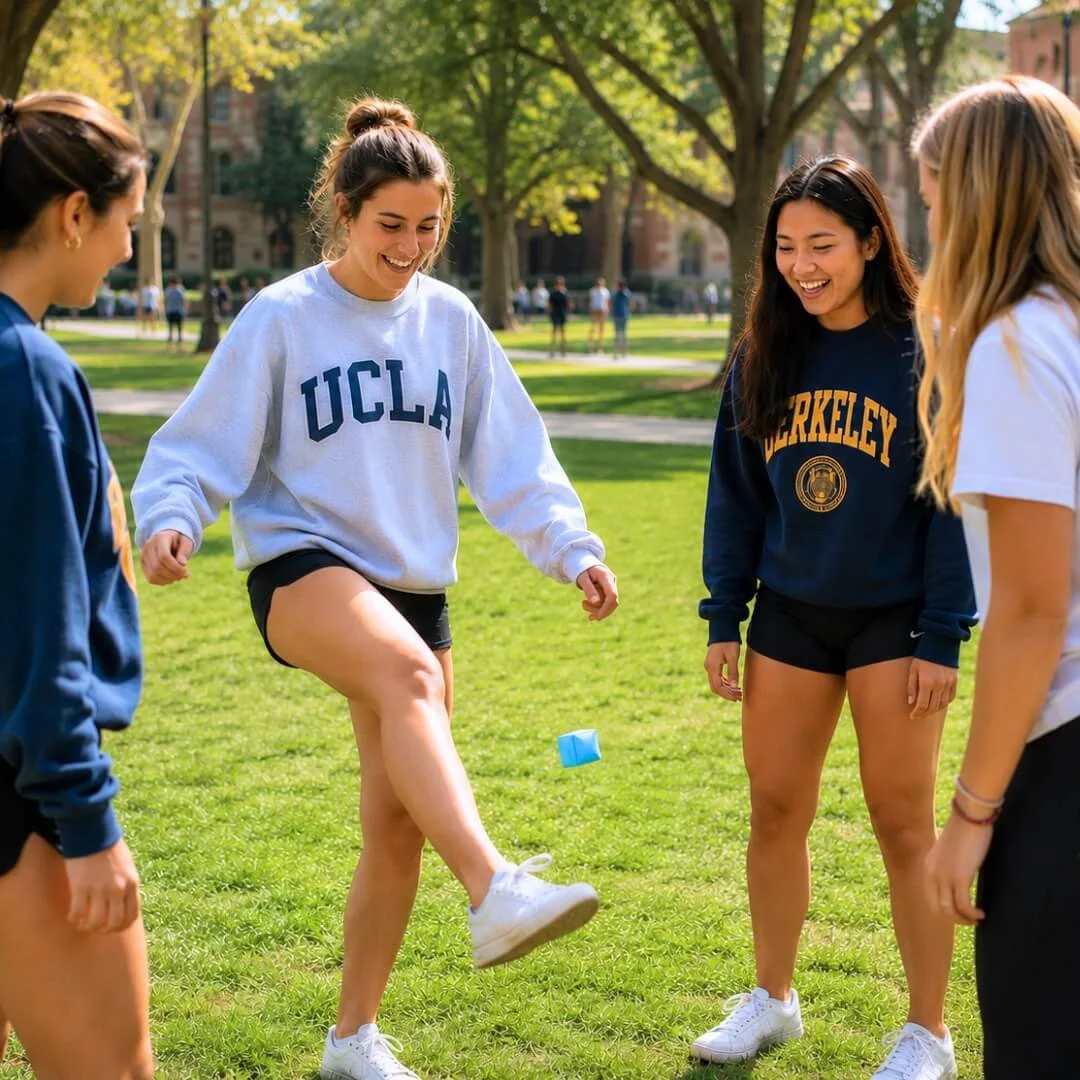
There's a reason certain promotional products end up in a drawer, tossed after a week, or quietly donated to the office supply pile. Pens run out. Tote bags multiply. Stress balls lose their squeeze. But a well-made kick bag? It gets used. Tossed between coworkers on a lunch break. Passed around at a trade show. Balanced on a knee during a long afternoon meeting. It earns its keep in a way that most promotional swag never does.
Foot bags — also called kick bags, jelly footbags, freestyle footbags, hacky sacks (though that's a registered trademark), kick sacks, juggling bags, and bean bags depending on who you ask and where you're shopping — have quietly been one of the most underutilized promotional products in the industry. That's starting to change.
This guide breaks down everything you need to know about foot bags as branded merchandise: the history, the appeal, the different styles and materials, how to customize them for maximum impact, who they're right for, and exactly what you can expect to pay. Whether you're sourcing branded giveaways for a fitness brand, a university, a music festival, or a tech company with a hip campus culture, there's a foot bag configuration that fits your audience and your budget.
A Brief History of the Hacky Bag
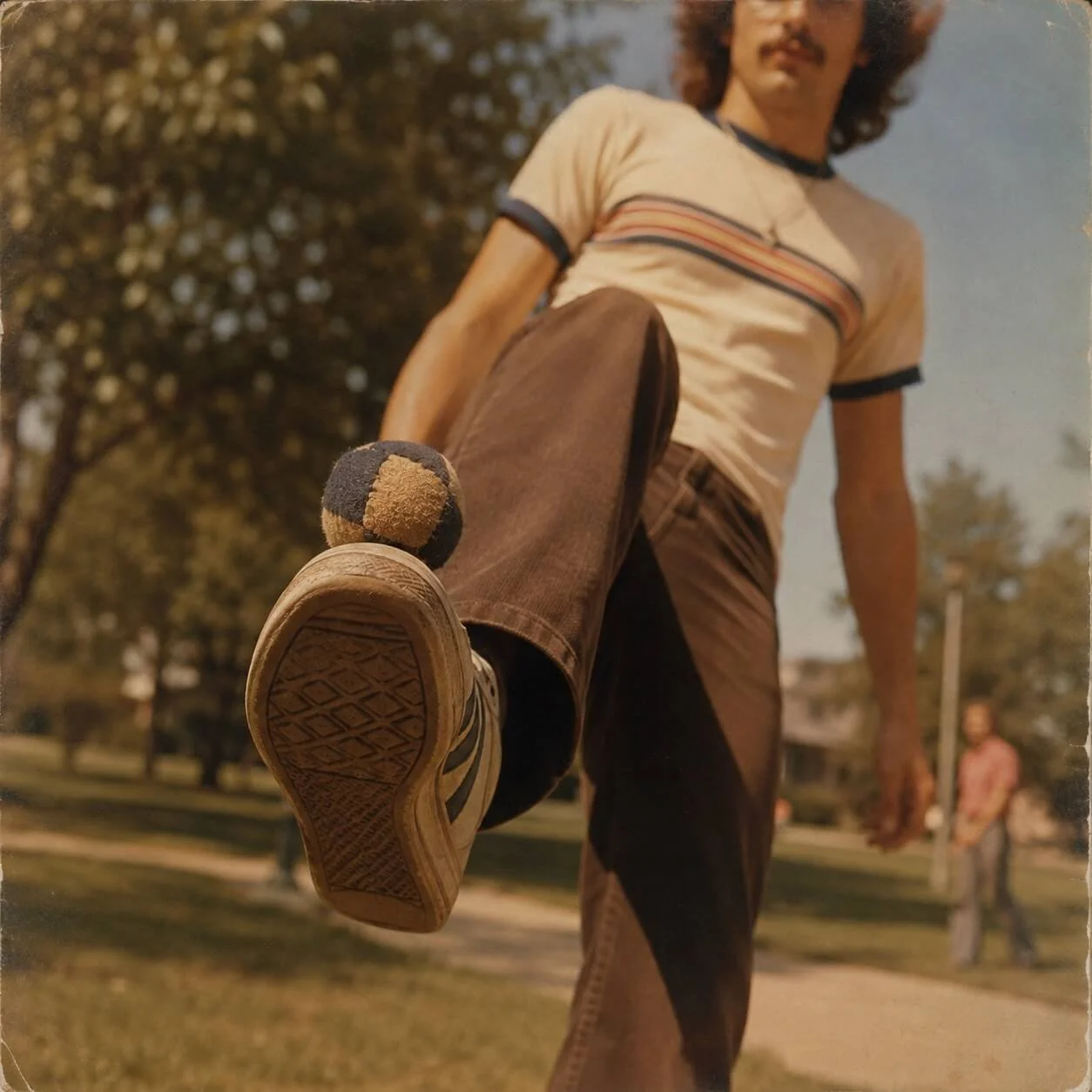
Foot bags have a longer history than most people realize. While the modern craze is often traced to the early 1970s — when Mike Marshall and John Stalberger developed a small, bean-filled bag as part of a post-knee-surgery rehabilitation routine — the underlying concept of kicking small objects with the feet is found across cultures and centuries.
The modern Western foot bag took off during the 1970s and 1980s as part of a broader embrace of non-competitive, cooperative outdoor recreation. College campuses, beach communities, and the emerging festival circuit took to it enthusiastically. By the mid-1980s, the World Footbag Association had been founded, competitive freestyle and net footbag had become official sports with structured rulesets, and world championships were drawing international competitors.
Why Foot Bags Work as Branded Merchandise
High Visibility, Long Shelf Life
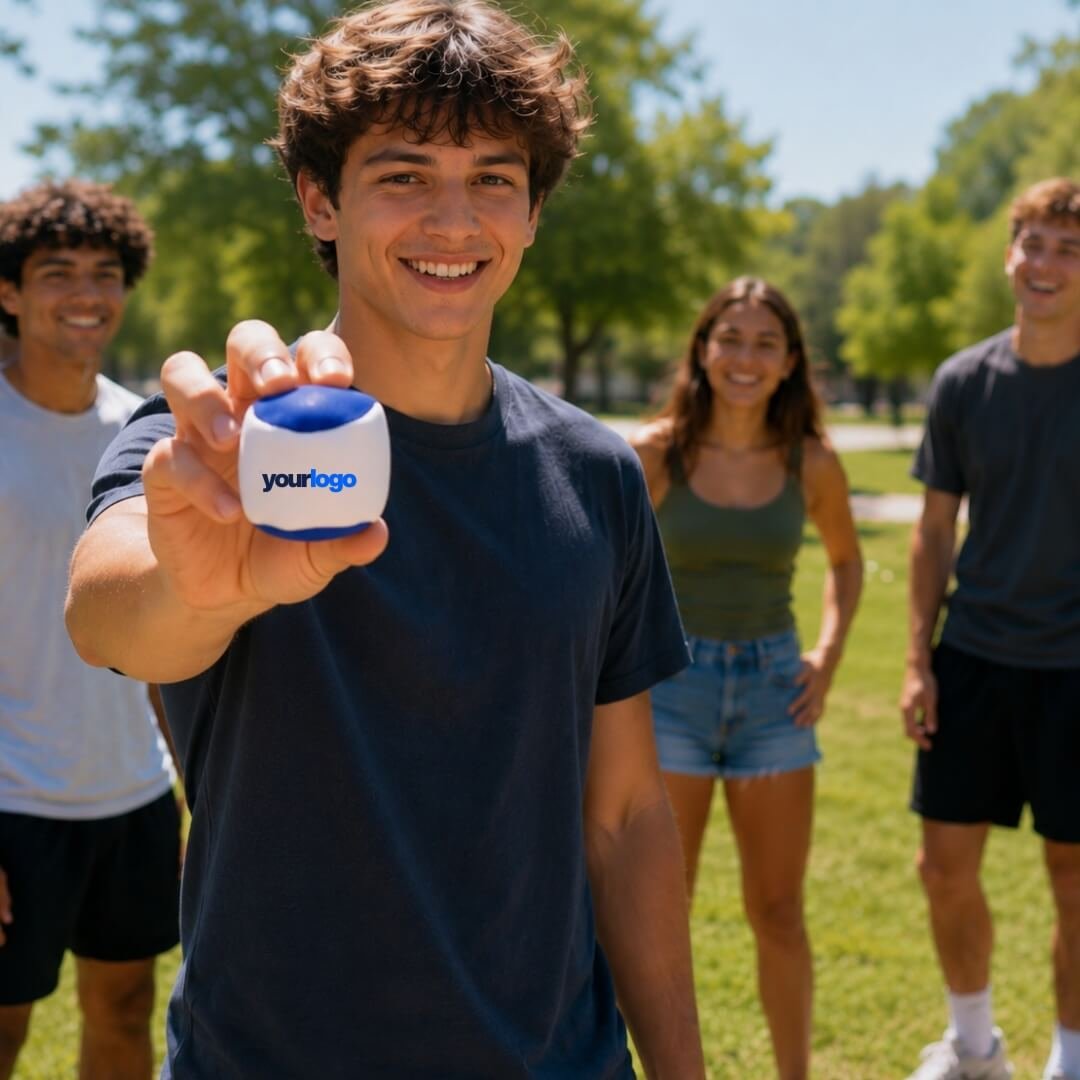
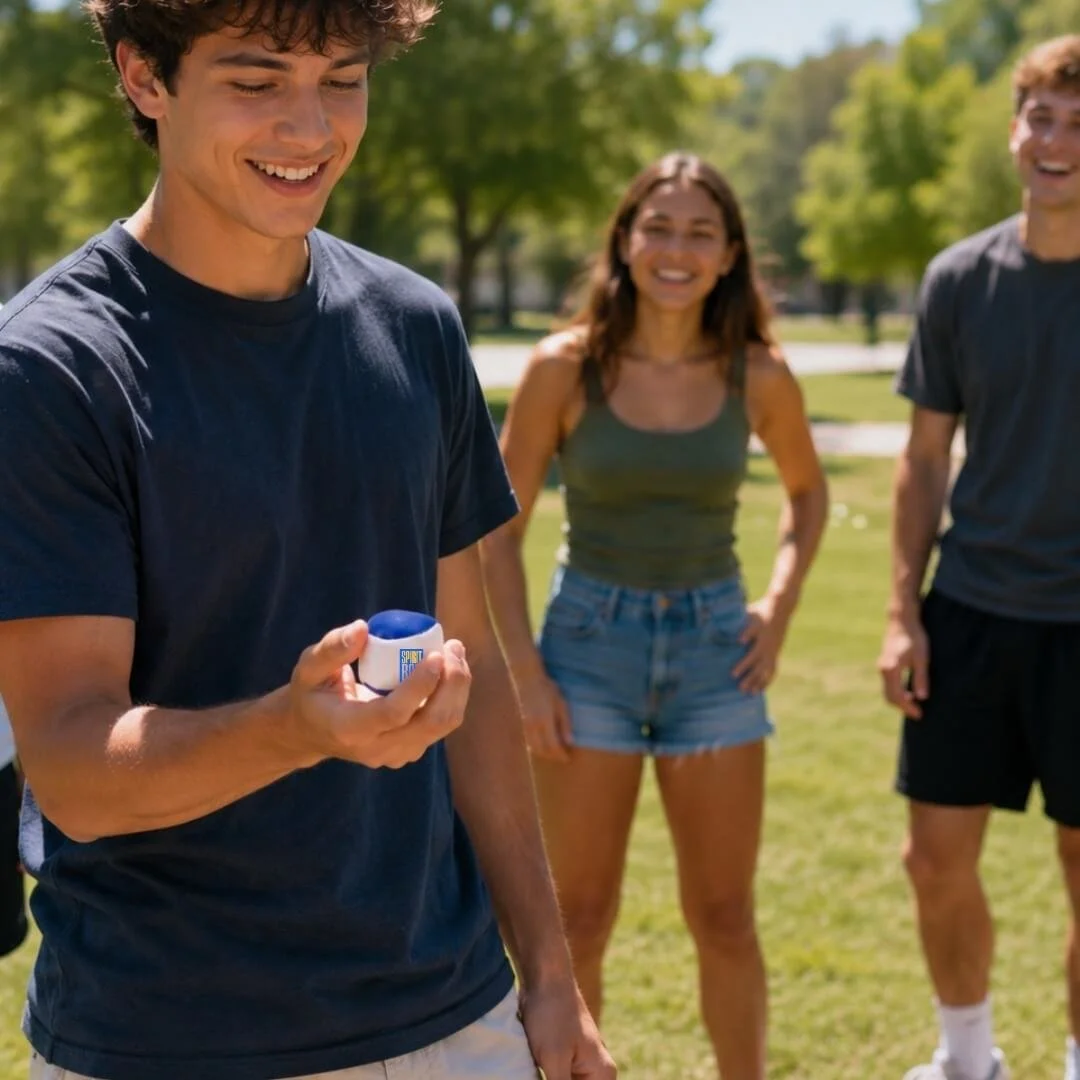
Promotional products succeed when they're used repeatedly in social, visible contexts. A branded foot bag hits both marks. Unlike a keychain or a magnet that sits in one place, a foot bag gets picked up, tossed, and kicked in group settings — which means your logo gets seen not just by the recipient, but by everyone around them.
The tactile, toy-like quality of a foot bag also gives it tremendous staying power. People keep them on their desks, in their cars, in their jacket pockets. They're the kind of object that invites fidgeting and casual play, which means repeated brand exposure in low-pressure, positive contexts.
Affordability at Scale
Few promotional products deliver the same impression-per-dollar value as a foot bag. Starting well under $2 per unit at volume (more on pricing below), they're accessible even for mid-size campaigns and organizations that can't blow their budget on premium giveaways. Yet they feel substantial and high-quality — especially the PU leather models — in a way that many budget promo items simply don't.
Universal Appeal Across Age Groups
Foot bags are genuinely fun for a wide age range. Kids love them. College students love them. Adults who haven't picked one up since the '90s rediscover their affection immediately. That multigenerational appeal means a foot bag can work at a family-oriented event, a campus recruitment drive, a corporate wellness fair, or a music festival with equal effectiveness.
Association with Active, Healthy Lifestyles
Brands in wellness, fitness, outdoor recreation, sports nutrition, athletic apparel, yoga and mindfulness, and related categories have a natural alignment with foot bags. The association is intuitive: kicking a bag around is physical activity. It's playful movement. It fits seamlessly into a "get off the couch, get moving, feel good" brand narrative.
But even brands outside the fitness space can leverage that association. Giving someone a kick bag says, implicitly, we value fun. We value movement. We're not just another corporate giveaway machine. That positioning has value regardless of your industry.
Eco-Friendly Options Exist
For brands with sustainability commitments, the canvas-and-rice-husk square foot bag (more on this below) offers a natural, biodegradable fill option that aligns with green brand narratives. Being able to say your giveaway is filled with rice husk — an agricultural byproduct — rather than synthetic materials is a meaningful differentiator for environmentally conscious audiences.
Which Foot Bag Is Right for Your Campaign?
Style 1: Leather Kick Sack (PU Leather with Ceramic Balls & Foam Beads)
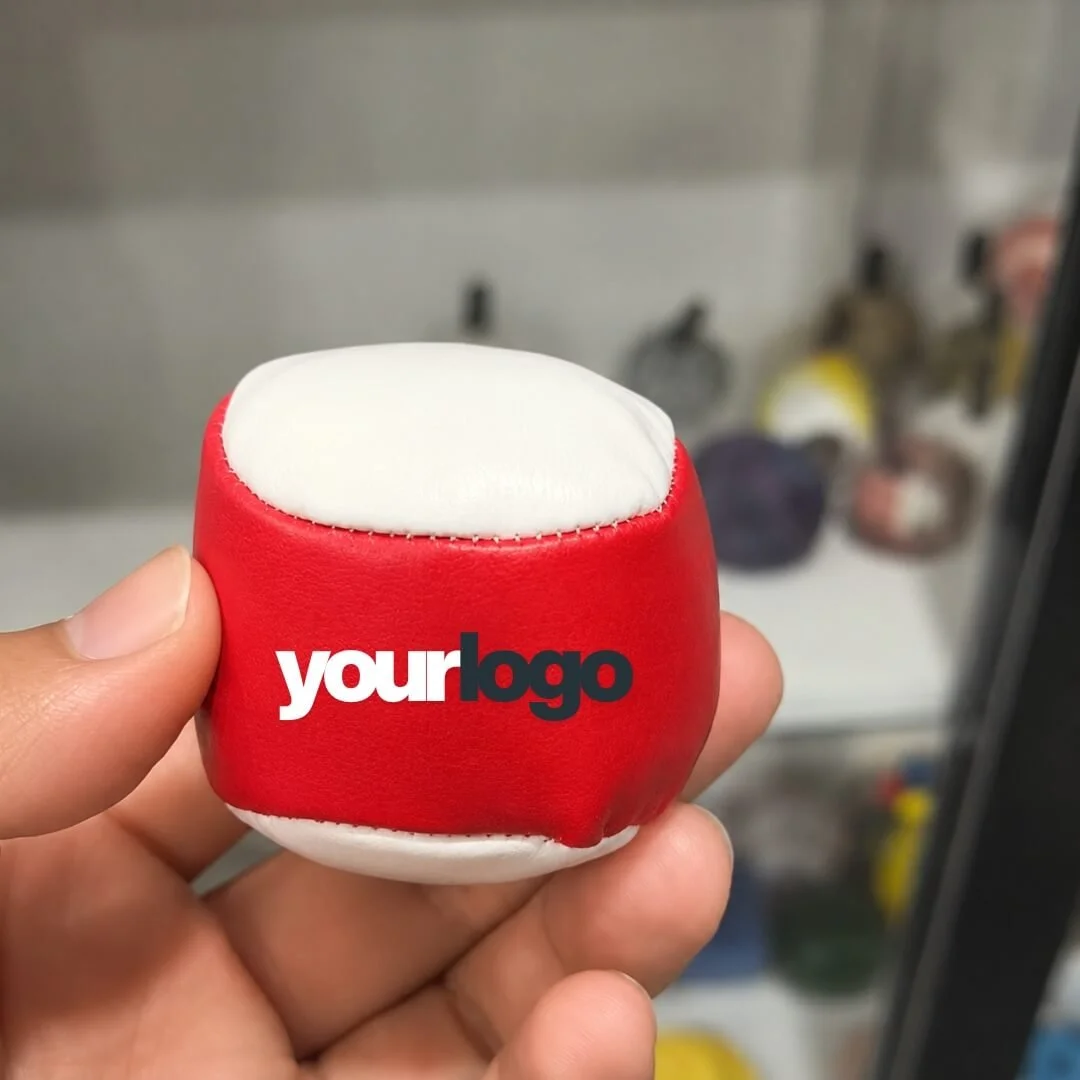
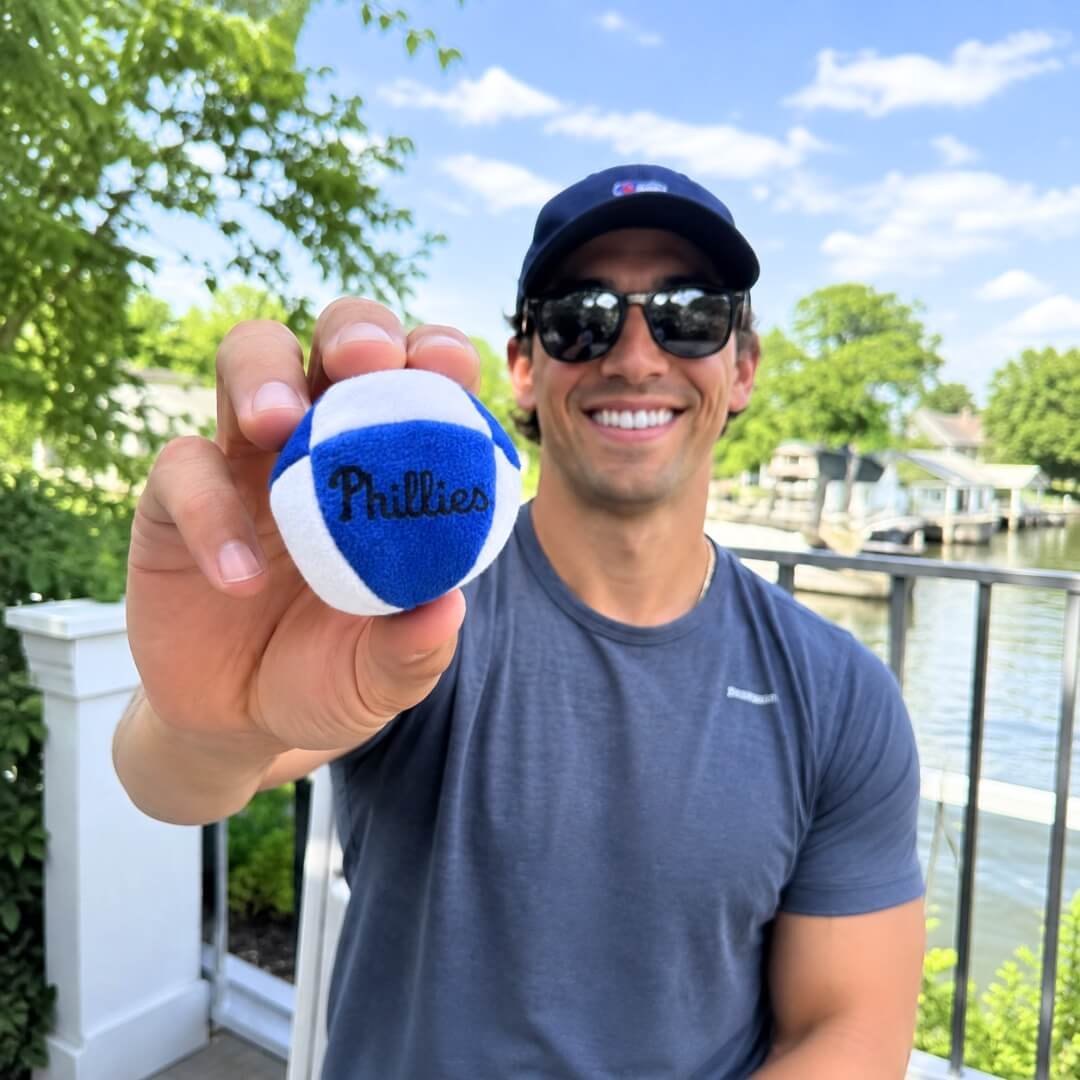
The leather kick sack is the premium option in the lineup — the one that makes recipients do a double-take when they pick it up. Constructed from panels of soft PU (polyurethane) leather stitched together into a rounded shape, it's filled with a blend of ceramic balls and foam beads that gives it a distinctive, satisfying weight and responsiveness.
PU leather has a premium feel that significantly elevates the perceived value of the product. It's smooth to the touch, holds its shape well over time, and has a slight sheen that photographs beautifully. Recipients notice the quality immediately — it doesn't feel like a cheap carnival prize. It feels like something worth keeping.
The ceramic-and-foam fill is the secret to this bag's superior playability. The ceramic balls settle toward the bottom, giving the bag a satisfying thud when it lands on a foot or a surface, while the foam beads distribute the impact and cushion the feel. Experienced foot bag players often prefer this style for freestyle work because the weight and density allow for more controlled kicks and easier stalling (balancing the bag on the top of the foot).
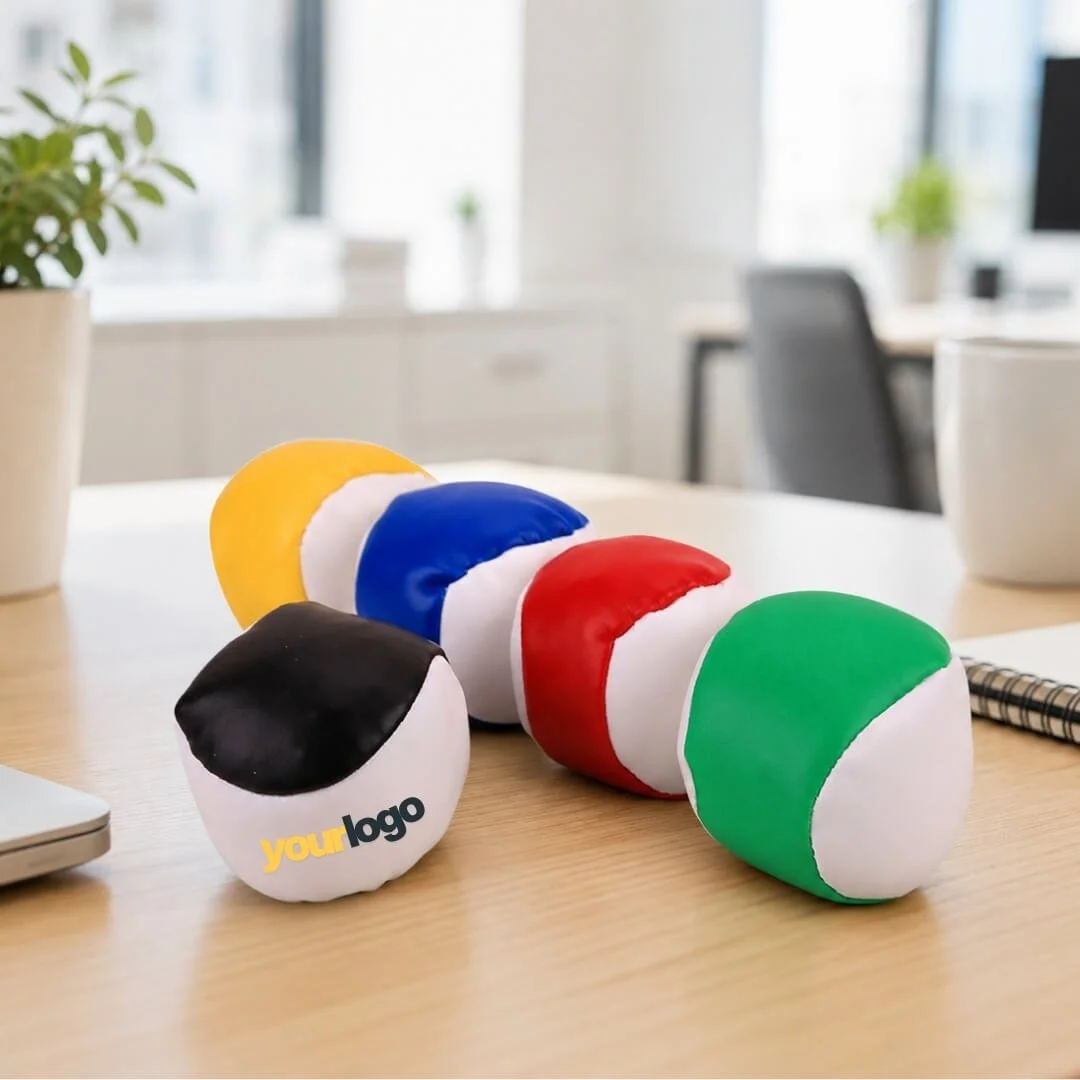
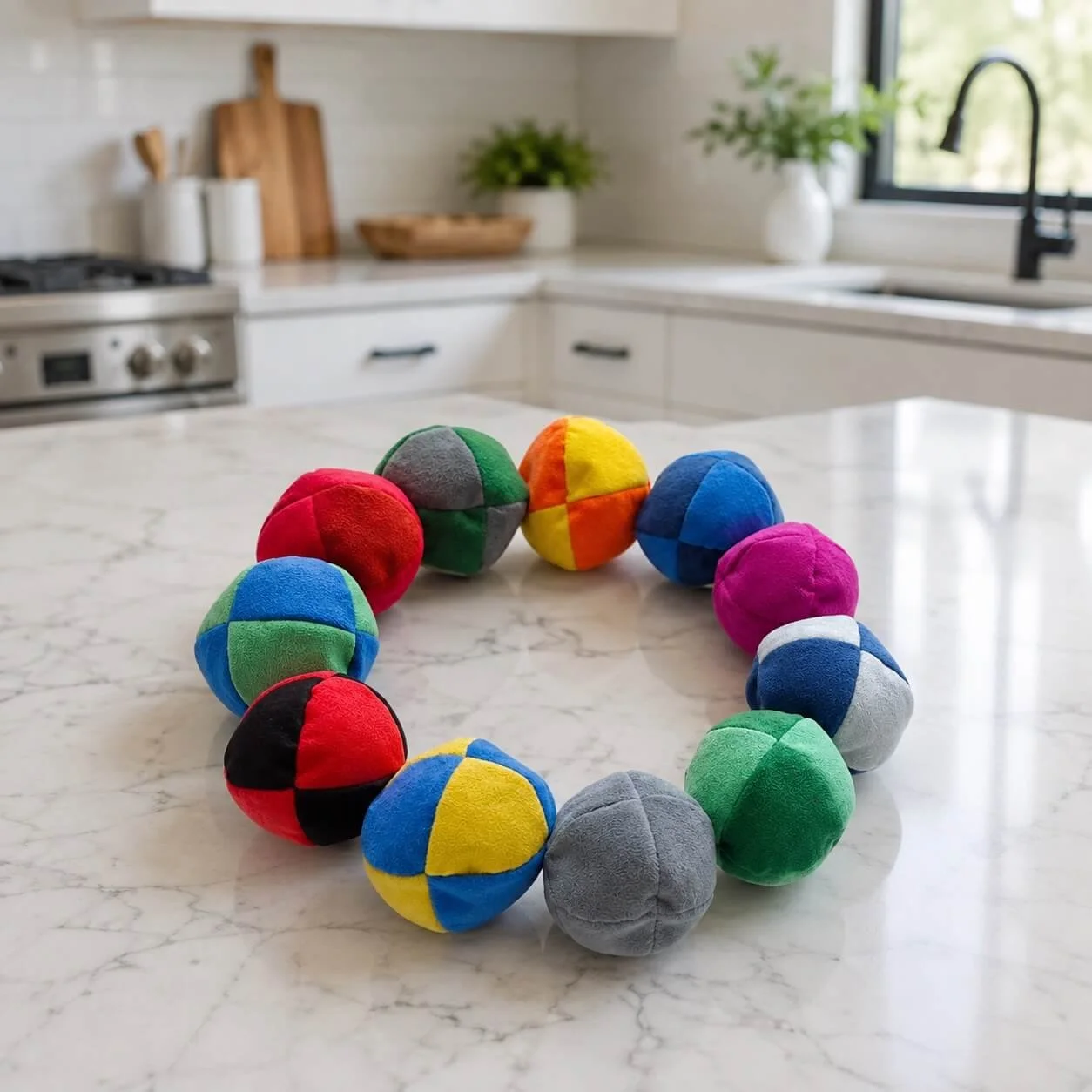
Available in five two-tone color combinations: Black/White, Red/White, Yellow/White, Royal Blue/White, and Kelly Green/White — the leather kick sack offers real branding flexibility. Match your brand colors, choose a combination that stands out at your event, or mix and match across a run for a collectible effect.
Imprint Options and Logo Placement
The panels of the leather kick sack are the natural imprint location. A 1-color imprint works especially well for bold, high-contrast logos, wordmarks, or simple graphic marks. The curved surface means very fine detail and small text can be tricky — simpler, bolder designs always read better on curved panels.
Ideal For:
Sports brands, athletic apparel companies, gyms, and fitness studios
Outdoor recreation companies, camping gear, and adventure brands
Tech companies and startups with active, playful brand identities
University and college recruiting and admissions giveaways
Music festivals, summer camps, and outdoor events
Trade show booths targeting younger, active demographics
Corporate wellness programs
Youth sports leagues and organizations
Available Customization:
Five two-tone color options: Black/White, Red/White, Yellow/White, Royal Blue/White, Kelly Green/White
1-color, 1-location imprint (included)
Available starting at 50 units
Style 2: Square Canvas Kick Bag (Canvas with Rice Husk Fill)
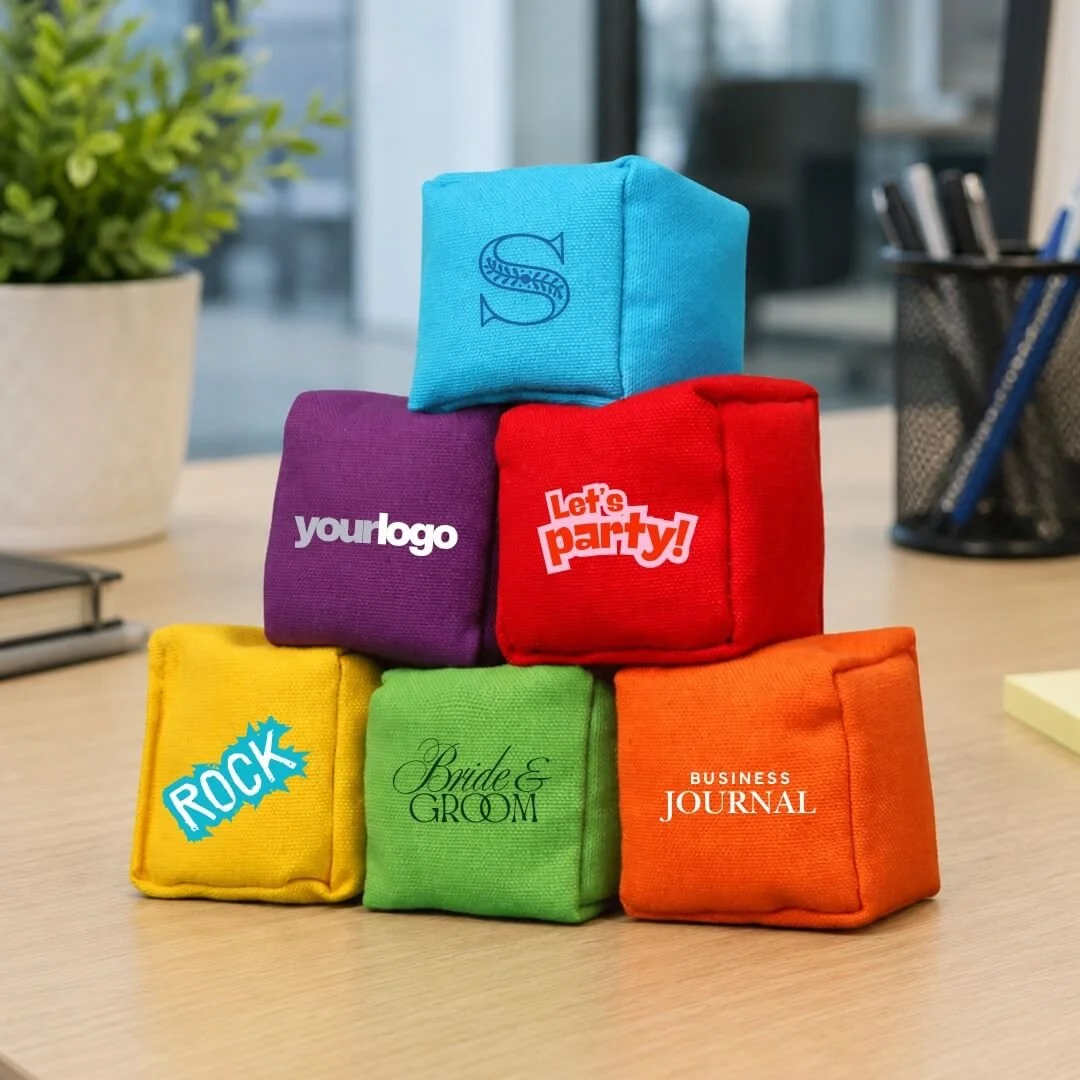
The square canvas kick sack occupies a different aesthetic niche entirely. Rather than a rounded shape, this bag is a true square — a small, flat-faced cube of natural canvas fabric, stitched at the seams, filled with rice husk. The result is something that reads simultaneously as rustic, artisanal, and eco-forward.
Canvas has a texture and warmth that synthetic materials can't replicate. It's the material of tote bags, aprons, and workwear — it carries associations of durability, naturalness, and unpretentious quality. The square shape makes it uniquely distinctive on a display table or in a giveaway bag, standing out immediately from the round bags everyone else is distributing.
Rice husk fill is one of the more interesting material choices in the promotional product world. Rice husks are the outer shells of rice grains, a byproduct of milling that would otherwise be burned or discarded. They're lightweight, natural, biodegradable, and surprisingly firm — they compress under pressure and spring back, giving the bag a lively, bouncy feel that players enjoy.
Available in six vibrant colors: Red, Yellow, Blue, Green, Purple, and Orange
Imprint Options and Logo Placement
The flat face of the square canvas bag is an ideal imprint surface. Unlike curved bags, the flat canvas panels can accommodate more detailed artwork, multi-element logos, and even short text phrases or taglines. The natural canvas background creates a warm, tactile aesthetic that works beautifully with earthy, organic, or handcrafted brand identities.
Ideal For:
Organic food and beverage brands
Craft breweries, wineries, and distilleries
Natural and eco-friendly product companies
Outdoor and camping brands with a sustainability focus
Farm-to-table restaurants and food festivals
Yoga studios, wellness retreats, and mindfulness brands
Environmental nonprofits and green initiatives
Farmer's markets and agricultural events
Schools and educational programs with environmental themes
Any brand with a strong sustainability or natural-living narrative
Available Customization:
Six color options: Red, Yellow, Blue, Green, Purple, Orange
1-color, 1-location imprint (included)
Available starting at 50 units
Style 3: Suede Sandbag Ball (PVC)
The suede sandbag ball is the high-volume workhorse of the foot bag lineup. Made from PVC with a suede-like texture, it has a soft, matte finish that feels comfortable in the hand and forgiving underfoot. The sandbag fill gives it a dense, satisfying weight — it lands solidly, doesn't bounce unpredictably, and has a tactile quality that makes it difficult to put down.
The suede finish is particularly well-suited to imprinting. PVC suede takes ink cleanly and holds it durably, meaning your logo stays legible and vivid even after repeated handling. The material is also highly resistant to scuffing and surface wear, making it one of the more durable options in the foot bag category.
For brands ordering at volume — 500, 1,000, or 2,000 units — the suede sandbag ball delivers exceptional value. At 2,000 units via regular boat shipping, the per-unit cost drops to just over a dollar, making it one of the most cost-efficient branded giveaways available anywhere in the promotional product market.
Imprint Options and Logo Placement
The suede surface of the sandbag ball is an excellent imprint canvas. Bold logos, wordmarks, and simple graphic marks all translate cleanly onto the matte PVC finish. As with any curved surface, keeping designs simple and high-contrast will yield the best results. 1-color, 1-location imprint is included in the price.
Ideal For:
Large-scale trade shows and conferences requiring high quantities
Sports leagues, recreation centers, and athletic programs
School and university events with broad distribution needs
Corporate events and employee appreciation campaigns at scale
Retail chains and franchise brands running system-wide promotions
Any campaign where maximum reach at minimum cost is the priority
Available Customization:
1-color, 1-location imprint (included)
Available in quantities from 500 to 2,000+
Customization Best Practices: Getting the Most Out of Your Imprint
Choosing the right foot bag is only half the equation. The other half is executing your customization in a way that maximizes brand impact. Here's what experience teaches about foot bag imprint best practices.
Keep It Bold, Keep It Simple
The kick bag canvas — whether curved PU leather panels or flat square canvas faces — is a small surface. Your brand identity needs to translate at a small scale with a single color. That means:
Avoid fine lines and intricate details. They will not survive the imprint process cleanly. If your logo has fine detail, work with your designer to create a simplified version specifically for small-surface promotional products.
Prioritize your wordmark or logomark, not both. You usually don't have room for a full logo lockup with tagline, address, website, and phone number. Pick the element that has the most brand recognition and let it breathe.
High contrast is your friend. Dark ink on light material, or light ink on dark material, reads clearly from a distance and in motion. Medium-contrast combinations look great in mockups and muddy in real life.
Think About Color Psychology
The color of the bag itself communicates before your logo even registers. Some strategic color considerations:
Brand color matching: If your brand has a signature color, a foot bag in that color (with a contrasting logo imprint) creates instant brand recognition. A Tiffany-blue foot bag. An REI green foot bag. An orange Home Depot kick bag. The color does the work.
Seasonal relevance: Bright, saturated colors work for summer festivals and outdoor events. Earth tones and naturals work for harvest festivals, farm events, and autumn campaigns. Pastels and bold brights work for school and youth-focused programs.
Stand out in the giveaway pile: Trade show giveaway tables tend to be a sea of navy and black. A bag in an unexpected color — bright yellow, deep teal, rust orange — will be noticed and picked up before the conventional options.
Consider the Packaging
A foot bag presented loose in a pile communicates "giveaway item." The same foot bag presented in a small kraft-paper bag with a hangtag communicates "gift." For higher-end applications — client appreciation gifts, employee wellness packages, premium event swag — simple packaging elevates the entire experience and justifies a higher perceived value.
Lean Into the Story
The rice husk fill is a story. The PU leather construction is a story. The fact that you're giving away something people will actually use and enjoy is a story. Don't waste that. Use your packaging, your table signage, your social media posts, and your sales team's talking points to communicate why you chose this item and what it says about your brand.
"We're giving away these canvas kick bags filled with rice husk because we care about sustainability" is a message that lands. "Here's a free thing" is not.
-
These are all common names for essentially the same product category. "Foot bag" and "footbag" are the generic terms preferred in the competitive footbag community. "Kick bag" and "kick sack" are common in retail and promotional contexts. The important thing is that Hacky Sack is a registered trademark and shouldn't be used generically to describe foot bags — though it's colloquially used that way all the time.
-
PU leather foot bags are quite durable with normal use — the material resists scuffing, holds its shape, and the stitching on quality products is tight and reinforced. Canvas bags are similarly durable, with the natural material aging gracefully with use. Neither style is indestructible if aggressively abused, but for casual recreational use and the occasional spirited office game, they'll last for years.
-
Standard pricing includes 1-color, 1-location imprint. Additional colors and locations may be available — ask your sales representative about options and associated setup fees.
-
It depends on the style. The leather kick sack and square canvas kick sack both start at 50 units — very accessible for smaller campaigns and test runs. The suede sandbag ball starts at 500 units and is best suited for larger-scale distributions.
-
It varies by product. The leather kick sack and square canvas kick sack both have 4–10 days of production from proof approval, plus 8–12 days (air) or 18–22 days (boat) shipping — so plan on 2–5 weeks total. The suede sandbag ball ships by boat with a 6–8 week total turnaround, so it requires the most lead time. As a rule of thumb: if your event is 8+ weeks out, the sandbag ball is an option; if it's 5+ weeks out, boat shipping on the other styles saves money; if it's 3–4 weeks out, air shipping is the safest bet.
-
Yes — production begins after proof approval. You'll have an opportunity to review and approve the design before anything is manufactured.
Conclusion: Small Product, Big Brand Impact
The foot bag might be humble in size, but its potential as a promotional product is anything but. It's a product that gets used, that gets seen, that generates genuine smiles and spontaneous conversations. In a sea of forgettable giveaways, a well-made, well-branded kick bag stands out — not just on the table, but in the weeks and months of use that follow.
Whether you choose the high-volume value of the suede sandbag ball, the premium feel of the leather kick sack, or the earthy, sustainable character of the square canvas kick sack, you're investing in a promotional item with staying power. One that connects your brand with movement, fun, and the simple pleasure of a good kick.
Ready to get your brand in play? The minimums are low, the prices are right, and the payoff — in visibility, brand recall, and genuine goodwill — is hard to beat. Reach out today to discuss quantities, colors, and customization options.
Because the best promotional products aren't the ones that sit in a drawer. They're the ones that get kicked around.